Bali & Culture · April 22, 2026
Bali's Most Beautiful Easy-Access Waterfalls for a Wellness Escape
The best easy-access waterfalls near Ubud — Suwat, Tibumana, Leke Leke — and the real science of why moving water calms your nervous system.
By the Bali Longevity Tour editorial team · Medical topics reviewed for accuracy; not medical advice
Not every Bali waterfall requires a thigh-burning 300-step descent and a scramble over wet boulders. For a wellness retreat, the goal isn’t to conquer a landmark — it’s to stand in negative-ion-rich air beside moving water and let your nervous system downshift. That calls for beauty with easy access. Here are the falls we choose, and the reason they belong in a health program at all.
Why waterfalls are more than a photo
There’s a real physiological case for the waterfall day. Fast-moving water generates negative air ions, which several studies associate with modest improvements in mood and reductions in perceived stress. Add the green-and-blue environment — nature exposure that lowers cortisol and blood pressure — and the low-grade “soft fascination” of watching water, and you have a legitimate recovery intervention dressed as an excursion. This is landscape therapy, and it pairs perfectly with the mental reset work.
Suwat Waterfall (Suwat, Gianyar)
Our usual first stop. Suwat sits in a bamboo grove with a wide natural pool and — crucially — a genuinely gentle path down. It’s far quieter than the Instagram-famous falls, so you can actually hear the water instead of other people’s drones. The calm pool is ideal for a mindful, unhurried wade rather than an adrenaline plunge.
Tibumana Waterfall (Bangli)
A near-perfect single curtain of water dropping into a round, swimmable pool — symmetrical enough that it looks designed. The short, well-maintained trail makes it accessible for almost everyone, and the enclosed amphitheatre of jungle around it makes it one of the best spots on the island for a few minutes of streamside meditation.
Leke Leke Waterfall (Tabanan)
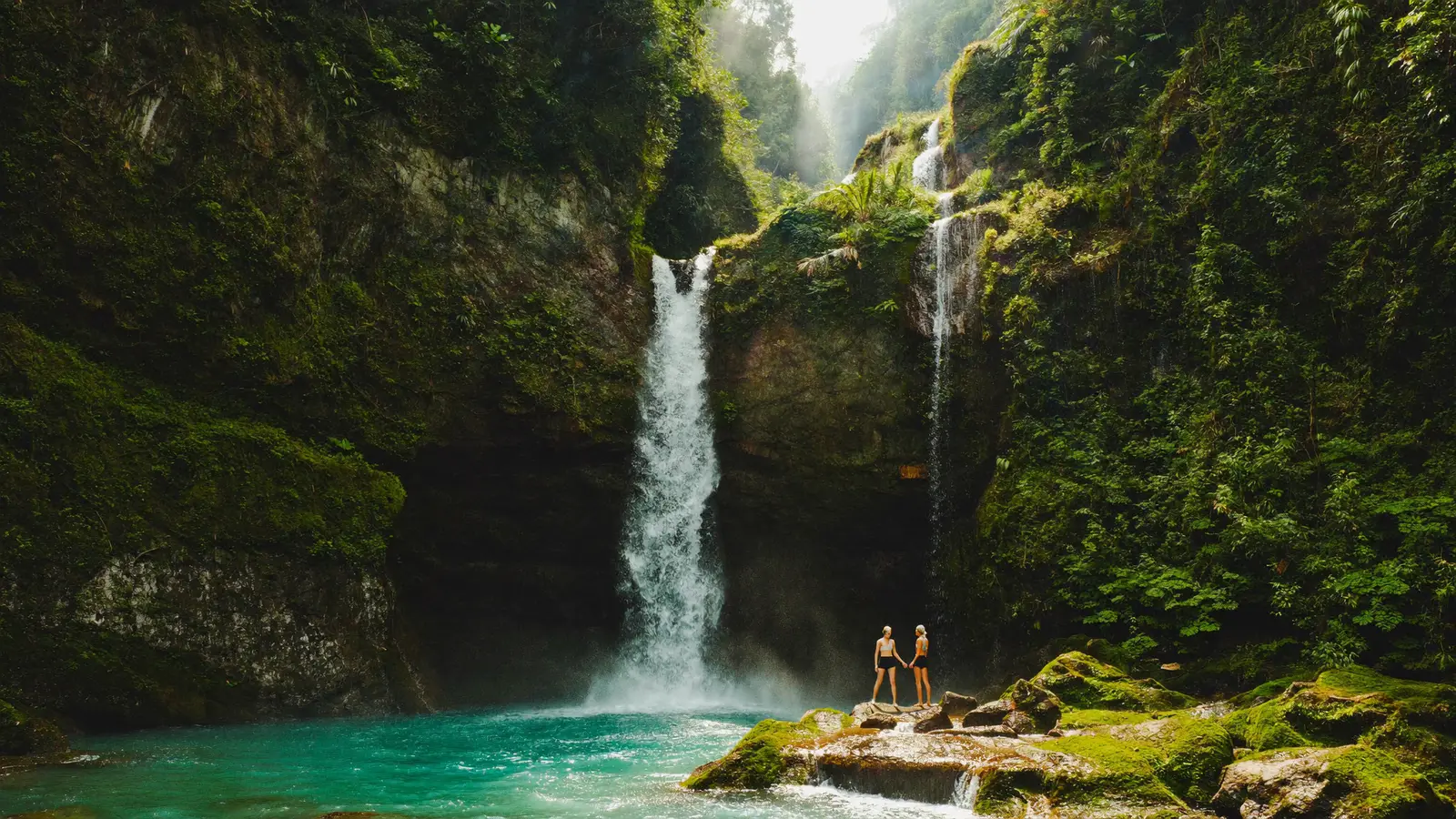
Slightly more of a walk, but along a lovely jungle path across a small bamboo bridge. Leke Leke’s tall, slender fall in a narrow gorge feels secluded and cinematic, and the operators keep numbers low, so it rarely feels crowded. Worth the extra few minutes on foot.
How to do a waterfall day well
A few hard-won tips from running these excursions:
- Grippy footwear. Wet volcanic rock is genuinely slippery — the most common (and most avoidable) injury on any waterfall trip. Trekking sandals with real tread beat fashion sneakers.
- Go early. Morning light is best for both photos and cool air, and you beat the day-tripper buses.
- Swimwear under your clothes. You’ll want to get in, and changing facilities are basic.
- Respect the sacred ones. Some Balinese falls have spiritual significance; follow posted etiquette and any dress requirements.
- Bring a dry bag. For phones and your health-passport notes if you’re mid-retreat.
Where the waterfall day sits in the retreat
On the 14-day program, waterfalls land on the recovery-and-tourism beats — Day 5 (Suwat) and Day 7 (Leke Leke and Tibumana) — deliberately placed between the more demanding diagnostic and contrast-therapy days. It’s the “heal and explore” half of the philosophy: the island isn’t a distraction from the protocol, it’s part of it.
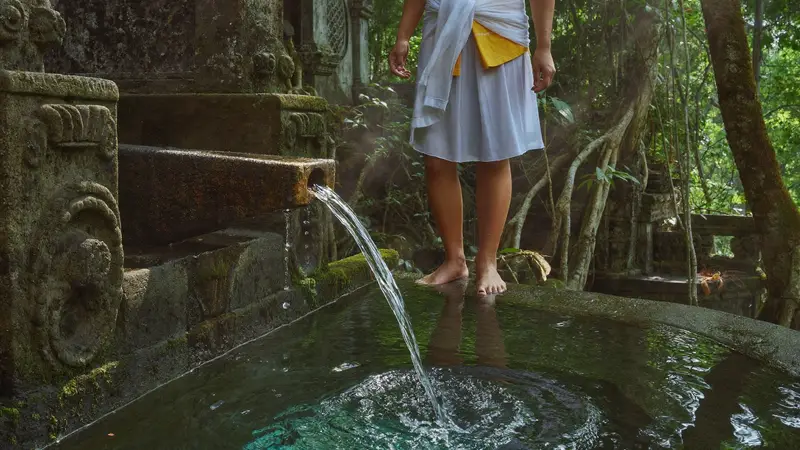
For the wider picture of how excursions fit the medical work, see the full 14-day program or read about the Melukat water ceremony — the other great water ritual of the week.
Access conditions and operator arrangements at Bali’s waterfalls change seasonally; the retreat handles logistics, guides and safety on all excursions.
See this in the 14-day program
Every topic in this journal is a working part of the retreat protocol.