The Program · April 12, 2026
Yoga vs Mobility Training: Which Do You Actually Need?
Passive flexibility and active mobility aren't the same. What each does, where each wins, why healthy ageing needs both, and how we scale movement to your data.
By the Bali Longevity Tour editorial team · Medical topics reviewed for accuracy; not medical advice
“Yoga versus mobility” is one of the most common questions we get, and it’s usually the wrong framing. In our experience they aren’t rivals — they train two different qualities, and confusing them is why some very flexible people still get injured, and some very strong people still can’t reach the floor. Let’s separate them clearly.
Flexibility and mobility are not the same thing
Flexibility is passive range: how far a joint can be moved by an outside force — gravity, a strap, a hand, a held stretch. A deep forward fold is flexibility.
Mobility is active range: how far you can move a joint under your own control and strength, with the muscles around it doing the work. Lifting your leg to hip height and holding it there, with no help, is mobility.
The distinction matters because they don’t automatically transfer. You can have plenty of passive range and very little active control over it — a common and surprisingly risky combination, because the end range you can reach is one your muscles can’t yet protect.
Why mobility predicts healthy ageing
Here’s the part that makes this more than a gym debate. Active, strength-through-range mobility is one of the better everyday predictors of how well people age. The ability to get down to the floor and back up, to reach overhead, to control a deep squat — these track with independence and lower fall risk later in life.
Passive flexibility alone doesn’t buy you that. Control does. Which is why, alongside markers like VO2 max and biological age, we treat movement quality as a genuine longevity metric, not a nice-to-have.
Where yoga wins
None of this is a case against yoga — far from it. Yoga does things mobility drills simply don’t:
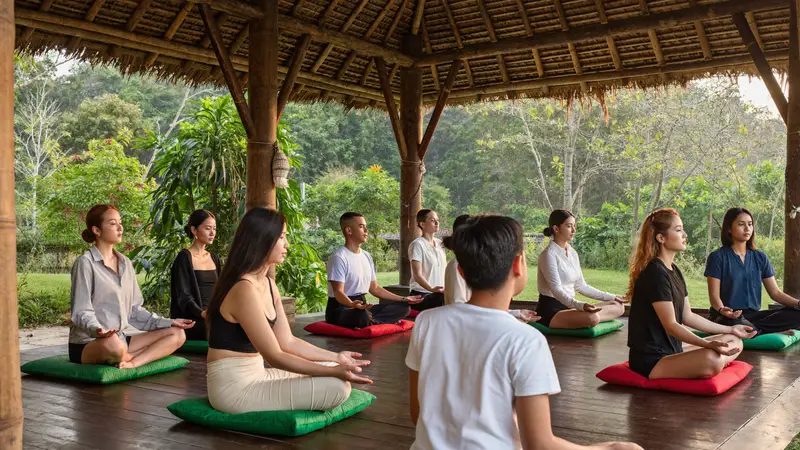
- Nervous system. A slow, breath-led practice is downregulation. It shifts you toward the parasympathetic state, which is why it pairs so naturally with the calming end of our work.
- Breath. Yoga trains breath awareness and control directly — the same skill that underpins so much of what we do.
- Balance and proprioception. Holding and flowing through positions sharpens your sense of where your body is in space.
If you want a calmer nervous system and better body awareness, yoga is a superb tool.
Where mobility training wins
Mobility work earns its place elsewhere:
- Joint control. It builds strength precisely at the end ranges where injuries happen, so the range you own is range you can defend.
- Injury-proofing. Controlled loading through full range makes tendons and joints more robust for lifting, sport and daily life.
- Usable strength. It closes the gap between the range you can passively reach and the range you can actually use.
Why you need both
The honest answer to “which do you need?” is almost always: both. Yoga without strength can leave you bendy but unstable. Mobility work without the calming, breath-led side can leave you robust but wired. Together they cover the full picture — a nervous system that can settle and joints that can control the range they reach. That’s exactly why our yoga and mobility module runs them as complements, not alternatives.
How we scale movement to your screening data
This is where a retreat differs from a generic class. We don’t prescribe the same session to everyone. Early in the program we assess each guest’s baseline — joint range, control, movement history, and the diagnostic markers we gather — and then scale accordingly.
Someone with big passive range but poor control gets more strength-through-range work. Someone stiff and stressed gets more breath-led mobility and gentler loading. The movement meets you where your data says you are, and it evolves across the two weeks — one strand of the wider arc we describe in what to expect from the 14-day reset.
Making the most of it in Bali
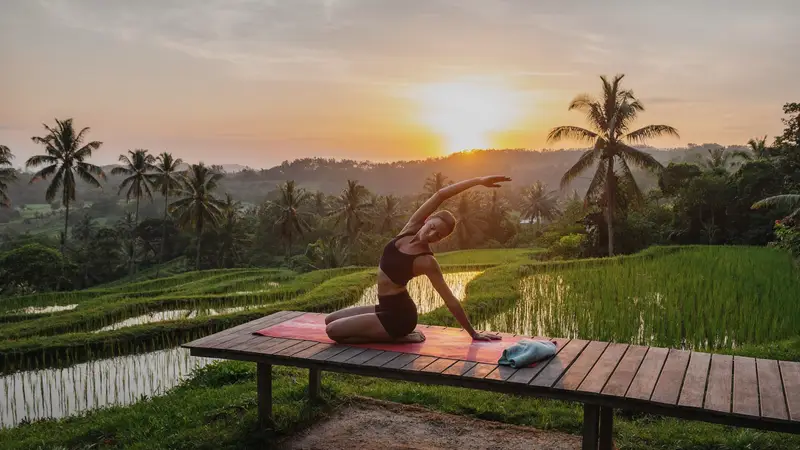
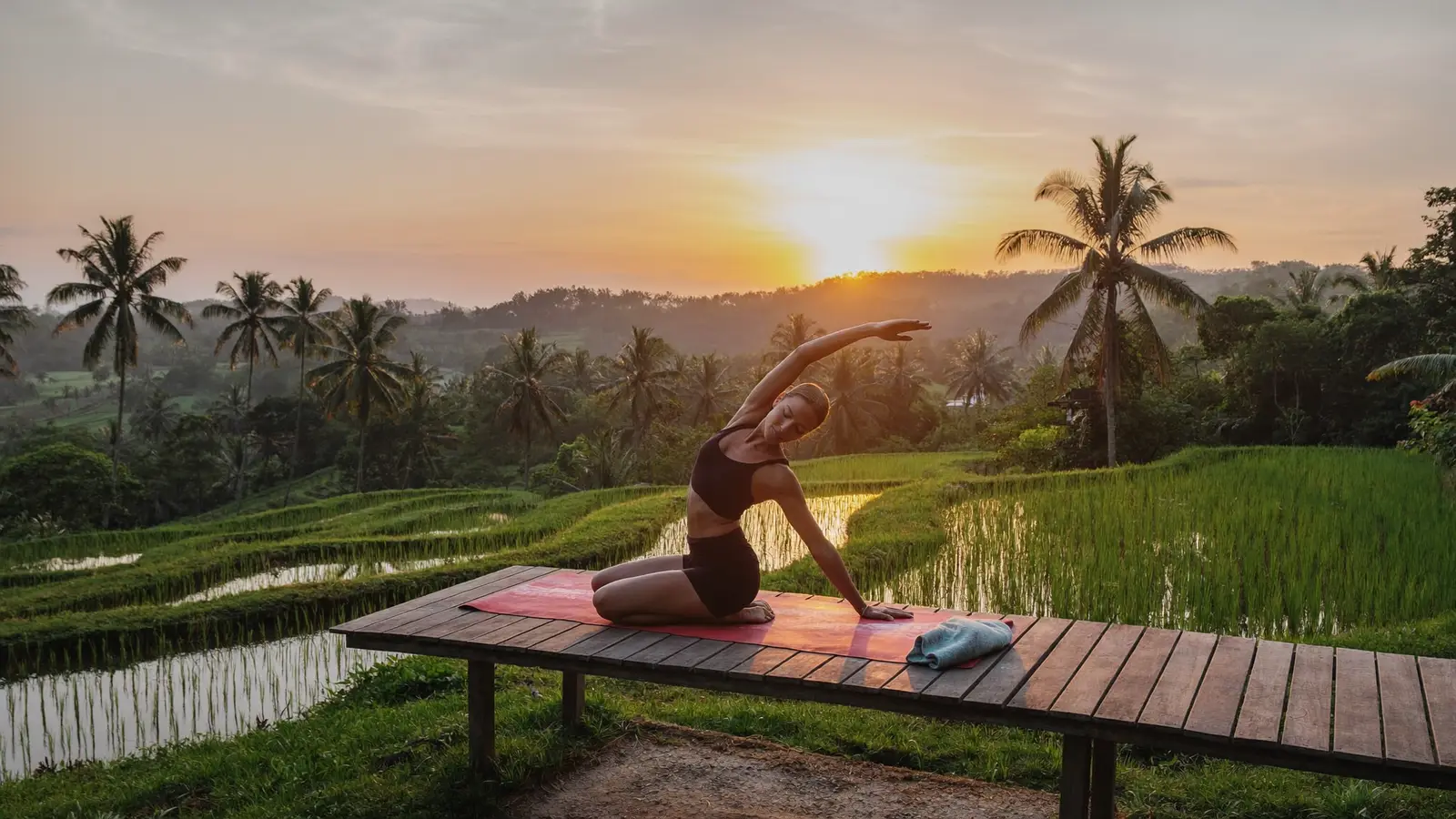
There’s a real advantage to learning this over the rice terraces at sunset rather than in a fluorescent studio — the environment does quiet work on the nervous-system side of the equation. Practical tip: comfortable layers and grippy bare feet are all you need, which is why movement barely troubles our Bali retreat packing list. Turn up, move well, and let us handle the rest.
Educational only, not medical advice. If you have an injury, joint condition or are new to exercise, work with a qualified professional; movement on the retreat is screened and scaled to each guest.
See this in the 14-day program
Every topic in this journal is a working part of the retreat protocol.