Cold & Heat · June 14, 2026
The Physiology of the Ice Bath: A Scientific Guide to Contrast Therapy
What actually happens in your body during a 4°C plunge and an infrared sauna round — dopamine, norepinephrine, brown fat, vagal tone — and why guidance matters.
By the Bali Longevity Tour editorial team · Medical topics reviewed for accuracy; not medical advice
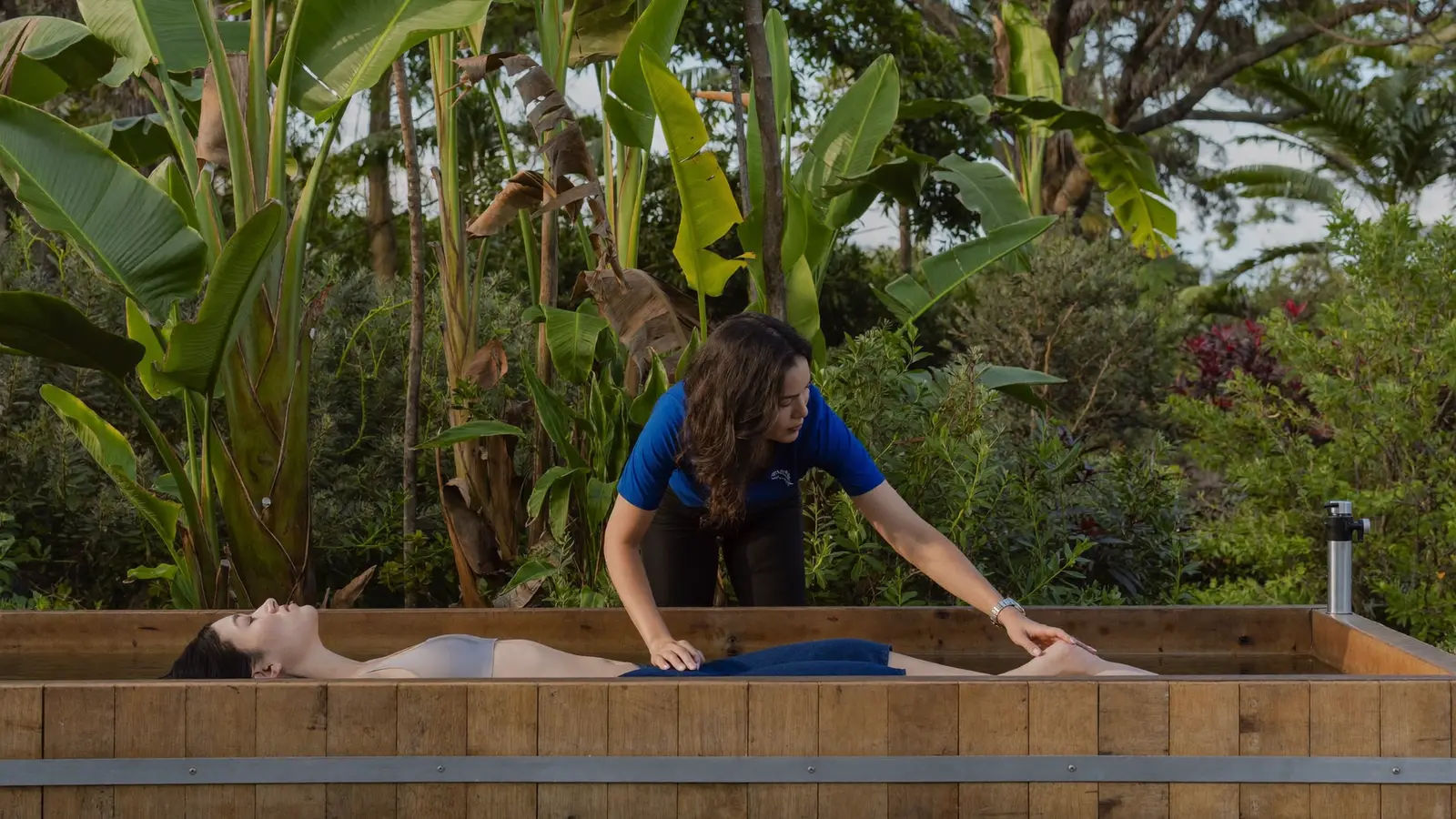
Cold plunges have become a cliché — a phone held above the water, a grimace, a caption about discipline. That’s a shame, because underneath the theatre is genuinely interesting physiology. Having guided thousands of immersions through Arctic Bear Baths, here’s what’s actually happening when you get in, and why the how matters more than the how cold.
The neurochemical storm
The moment you enter water around 4°C, your body treats it as a significant stressor — and responds with a flood of catecholamines. Studies of cold-water immersion have measured norepinephrine rising by 200–300% and dopamine climbing by around 250%, staying elevated for hours afterward.
This is the source of the famous post-plunge state: the clean, hours-long focus and mood lift that no coffee replicates. Dopamine here isn’t a spike-and-crash like sugar or social media; it’s a slow, sustained rise. That single mechanism explains most of why people get, frankly, addicted to cold in the healthiest possible way.
Why contrast — not just cold
Cold alone is powerful; cold paired with heat is a protocol. Alternating an infrared sauna with cold immersion drives repeated cycles of vasodilation (heat opens blood vessels) and vasoconstriction (cold closes them). This “vascular pump” is thought to:
- accelerate clearance of metabolic byproducts like lactate after training
- modulate inflammatory signalling and reduce delayed-onset muscle soreness
- improve vascular flexibility over time
The heat half matters on its own, too: large Finnish cohort studies associate frequent sauna use with substantially lower cardiovascular and all-cause mortality. Contrast therapy stacks two evidence-backed stimuli into one session.
The part nobody films: your breath
Here’s where guidance separates a practice from a stunt. When cold water hits your skin, the automatic response is the cold-shock reflex — a sharp gasp and hyperventilation. Give in to it and your heart rate spikes, vessels clamp, and the experience becomes pure panic.
The skill is a slow, controlled exhale. Master that and the same water becomes a place of calm. This is why we teach breathwork before anyone touches cold, and why our progression starts at 10°C, not 4°C. Learning to keep a steady exhale in cold water is also stress inoculation you carry into the rest of your life — the physiological definition of “keeping your cool.”
Brown fat and the metabolic angle
Repeated cold exposure recruits and activates brown adipose tissue — the metabolically active fat that burns energy to produce heat. Over weeks, this is associated with improved insulin sensitivity and metabolic flexibility, which is one reason cold protocols pair naturally with our precision nutrition work.
Cold plunge benefits, graded by evidence
Cold plunging went from fringe to everywhere in a few years, and the claims grew faster than the research. Here is how the main benefits stack up when you sort them by the strength of the evidence rather than by how often they are repeated online.
- Mood and focus — strongly supported. The catecholamine response described above is the cleanest mechanism in the field, and it matches what almost everyone reports after a plunge: calm, alert and clear for hours.
- Stress resilience — well supported. Choosing to stay calm in cold water is a controlled dose of acute stress. Practised regularly, it is associated with better heart-rate variability and a steadier response to everyday pressure.
- Recovery — supported, with a timing caveat. Cold reduces perceived muscle soreness, and contrast with heat helps after hard sessions. If muscle growth is your main goal, keep plunges a few hours away from strength training, because immediate cold may blunt some adaptation.
- Metabolism — emerging. Brown-fat activation and better insulin sensitivity are promising, but cold supports nutrition and training rather than replacing them.
- “Detox” and dramatic fat loss — not supported. Your liver and kidneys handle detoxification, and the extra calories burned to rewarm are modest.
The practical conclusion is the same one our cold specialists teach on the retreat: the benefit comes from regular, well-dosed practice with a calm exhale, not from the coldest possible water.
Doing it safely: what the science demands
Cold is a stressor, and stressors need dosing:
- Screen first. Cardiovascular conditions must be cleared — which is exactly why cold protocols on the retreat come after the Day-2 medical check-up, never before.
- Never combine strong breath-holds with water. Breathwork and immersion are taught separately; combining hyperventilation with submersion carries a real drowning risk.
- Progress, don’t prove. Duration and temperature increase across sessions under supervision. Ego is the most common injury.
What a realistic protocol looks like
Across the retreat, cold and heat are placed deliberately: a gentle first immersion on Day 3, full contrast sessions on Days 8 and 10, and integration work near the end — with recovery days between, because adaptation happens in the rest, not the plunge. You leave with a written protocol you can run at home without special equipment.
If you’re new to all this, start with how to start ice baths safely, then see the full guided ice bath & sauna module.
Educational only, not medical advice. Cold exposure carries real risks for people with cardiovascular or other conditions; the retreat screens and supervises all cold protocols. Never practise breath-holds in or near water.
See this in the 14-day program
Every topic in this journal is a working part of the retreat protocol.